

I’ve used a lot of apps in my time, but many fail to stand the test of time. A few apps, however, are discontinued not because they’re no good, but because they’re too good. This is sadly what happened to one of my favorite apps ever.
HTG Wrapped 2025: 24 days of tech
24 days of our favorite hardware, gadgets, and tech
Dark Sky was the best weather app I’ve ever used
I’ve tried many weather apps over the years. Some of them were okay, some of them were terrible. The current options are so bad, I’ve had to create my own weather widget using Shortcuts.
There was one weather app that I truly loved, however: Dark Sky. It was unlike any other weather app I’ve ever used. It displayed its data beautifully, with smooth, curved graphs showing the upcoming rain intensity, radar maps with color overlays indicating the likelihood of rain, and a simple timeline showing the chances of rain and its intensity throughout the day.
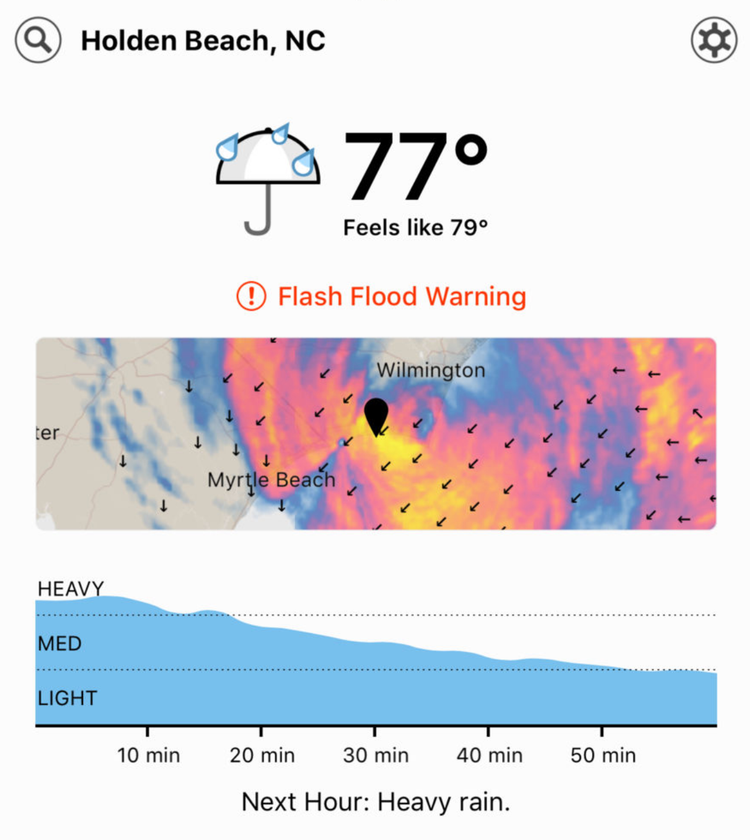
By far the best feature, however, was its hyperlocal rain alerts, which were accurate to the minute. You’d get an alert telling you that it was going to start raining in your location in three minutes, and more often than not, that’s exactly what would happen. It honestly felt a bit like magic at times.
Dark Sky was a paid app, but it was more than worth the money. Once I’d found Dark Sky, I couldn’t imagine using any other weather app ever again. How wrong I was.
Apple’s hyperlocal weather just doesn’t match up
In 2020, Apple announced that it had acquired Dark Sky. By 2023, the Dark Sky app and the API service were completely gone. Apple built Dark Sky’s tech into its own Weather app, and set up WeatherKit, a weather data service that developers could use to replace the Dark Sky API.
I was concerned when I first heard the news, as Apple doesn’t have a great track record with app acquisitions. Siri is a case in point; Apple’s voice assistant started life as a third-party app, was acquired by Apple, and has stagnated horrifically ever since. We’re still waiting for the long-promised Siri updates that will supposedly make the voice assistant more intelligent.
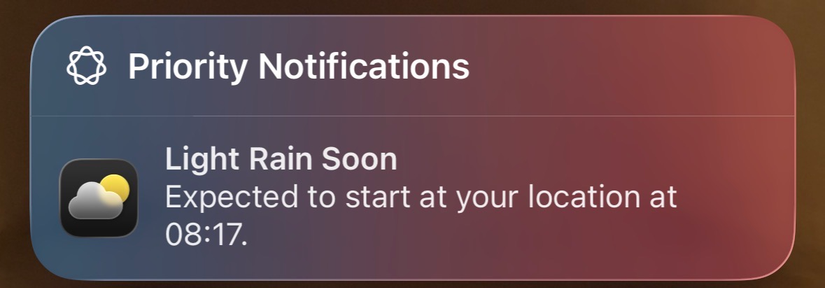
When Apple’s Weather app added Dark Sky features in iOS 15 and iOS 16, my fears were confirmed. The hyperlocal weather alerts were nowhere near as good as they had been in Dark Sky. Even today, the weather notifications on my iPhone rarely match my local conditions.
Apple’s Weather app tries to do too much
Ruining Dark Sky’s hyperlocal weather notifications wasn’t Apple’s only crime. The Dark Sky app was easy on the eye, with the most important information on the main screen: the temperature, an icon for the current weather conditions, a graph showing the upcoming rain forecast, and a timeline of conditions for the next 24 hours. That’s really all I ever wanted to know, all on one screen.
Apple’s Weather app, in comparison, shows far more information, while somehow managing to completely omit the information that I actually want: whether or not it’s going to rain in the next few hours. The main screen of the Weather app shows an icon for each hour representing the weather conditions, and while these will display rain clouds, the icons don’t always tell the whole picture.
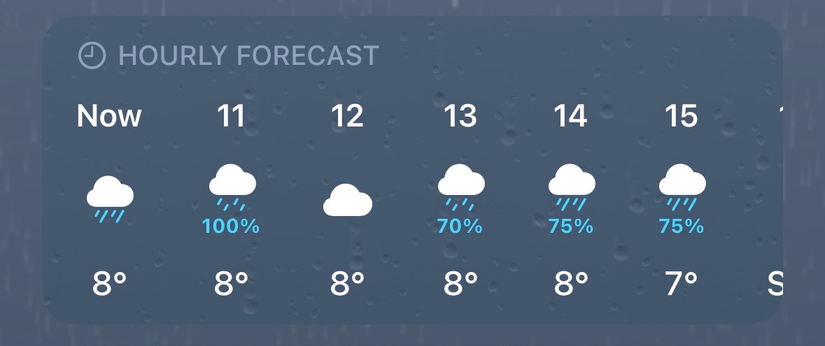
For example, according to the icons shown above, there won’t be any rain between 12 and 1 pm. Looking at the “Chance of Precipitation” chart, however, the chance of rain leaps up to 70% almost immediately after 12. The icon says it won’t rain, when the forecast says it probably will.
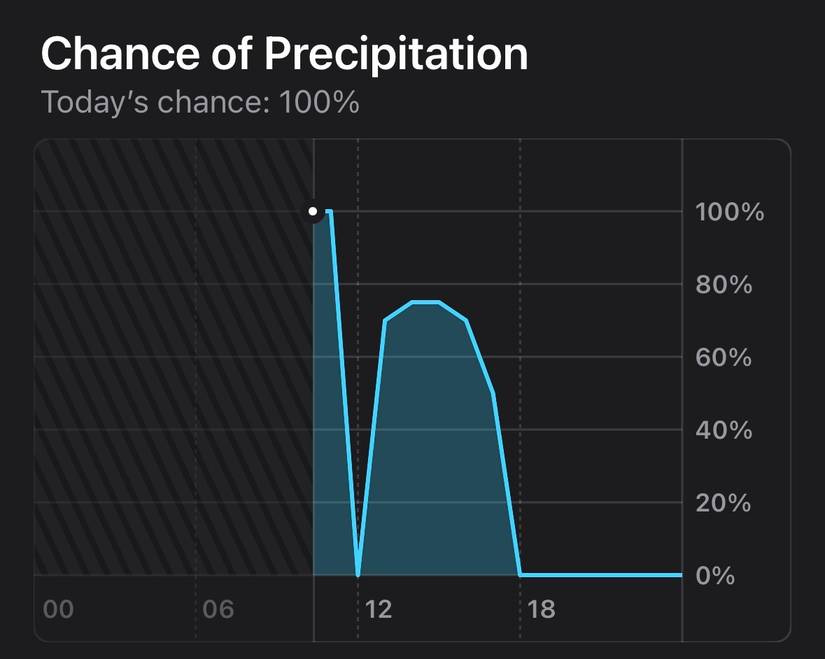
The Weather app has details on everything from the air pollution to the UV index, but I just want to know if it’s going to rain or not. Is that so much to ask?
Big tech acquisitions are often bad for consumers
Sadly, this is a common pattern when it comes to acquisitions. A small company makes its mark by doing something better than the rest. A big company sees that a small company is doing well and decides it wants a piece of the pie. The big company then goes on to ruin everything that was good about the original service, while simultaneously removing access to the good version of that service.
Remember Skype? It was the dominant market leader for VoIP until it was acquired by Microsoft in 2011, and began its inevitable decline, with feature bloat and a terrible UI redesign. Skype was officially retired in 2025. Microsoft was also at fault again when it acquired the popular Sunrise Calendar app, folded it into Outlook, and shut down the original app.
These types of acquisitions rarely seem to end well for consumers. Even if by some miracle, a big company somehow improved or just simply didn’t ruin the features of an app it acquired, shutting down the original app means less choice for users. It also removes any competition that might make the big company put some time and effort into improving its apps.
Apps come, and apps go, but there are some you never forget. Dark Sky was so good at what it did, and Apple somehow managed to completely remove all the parts that made it so good. Sadly, this was all too easy to forecast.