

In 2025, architecture exhibitions felt less like polished statements and more like provisional gestures. Shows were staged under conditions of interruption, uncertainty, and repair. The longest U.S. government shutdown in history shuttered all 21 Smithsonian museums and the National Zoo for 43 days beginning in October, abruptly cutting off public access to some of the country’s most important cultural spaces. Museums reopened in mid-November, but only under a temporary funding deal that expires in January 2026, leaving the threat of another shutdown hovering into the new year.
Against that backdrop, many of the year’s most compelling architecture exhibitions were preoccupied with survival over spectacle. They explored how buildings persist after demolition, how materials age and re-enter circulation, how drawing expands to planetary scale, and how biennials themselves strain under the weight of crisis, protest, and institutional contradiction. From Venice to Chicago, Copenhagen to Ithaca, exhibits in 2025 were rarely triumphant. Instead, they lingered in uncertainty, turned inward, and frequently presented itself as provisional, unfinished by intention rather than accident.
Venice Architecture Biennale 2025: Architecture is survival
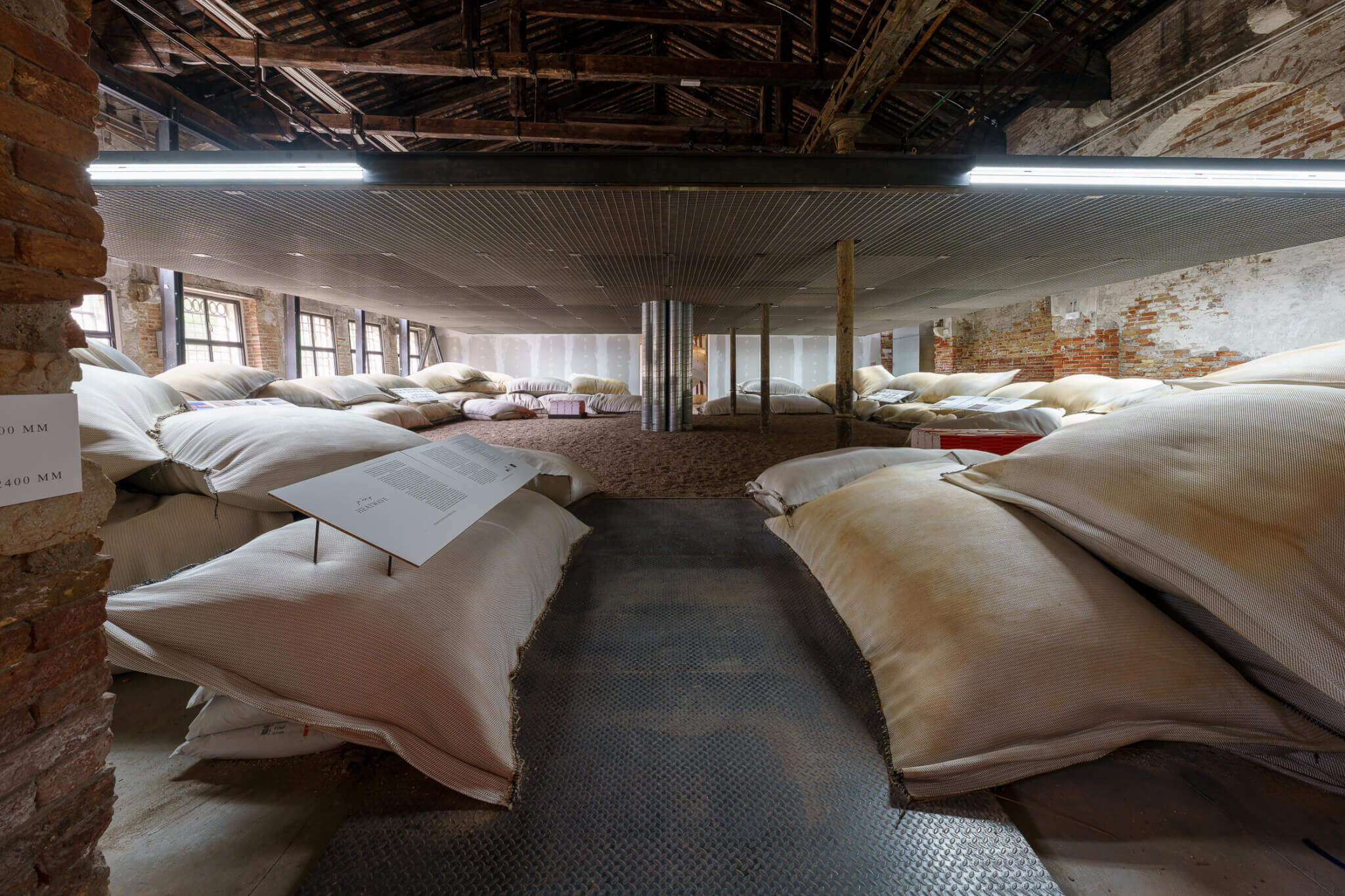
AN’s Jack Murphy, contributor Matt Shaw, and others reported from Venice this year as Carlo Ratti’s Intelligens-themed Biennale brought together high-tech systems, vernacular building traditions, and material experimentation across the Giardini and Arsenale. Rather than advancing a singular vision of the future, the exhibition emphasized coexistence between AI and craft, robotics and hempcrete, planetary thinking and local knowledge.
In coverage from Venice, the writers noted the biennale’s restrained tone and its insistence that architecture today is less about heroic solutions than about adaptation, maintenance, and ethics. Across both the central exhibition and national pavilions, survival, not innovation, emerged as the show’s quiet thesis.
The Many Lives of the Nakagin Capsule Tower: After the Building
At MoMA, The Many Lives of the Nakagin Capsule Tower extended that logic of afterlife into a single, stubborn object. The exhibition opened just three years after the demolition of Kisho Kurokawa’s metabolist icon, centering not only on its original futuristic ambitions but on the messy, human realities that followed. One fully restored capsule sat in tension with documentation of rust, leaks, abandonment, and reinvention.
Aki Ishida argued in AN that the building’s decay and eventual demolition did not signal the end of its architectural relevance, but rather revealed how meaning accumulates through use over time. Revisiting her earlier critique of Nakagin as an “obsolescent masculine dream,” she reflected on how the tower’s final residents recast a project originally designed for elite salarymen into a site of adaptation, care, and social life. The exhibition, she suggests, positions obsolescence not as failure, but as the condition that made alternative architectural lives possible.
On view through July 12, 2026
1925–2025: 100 Years of Art Deco at the Musée des Arts Décoratifs
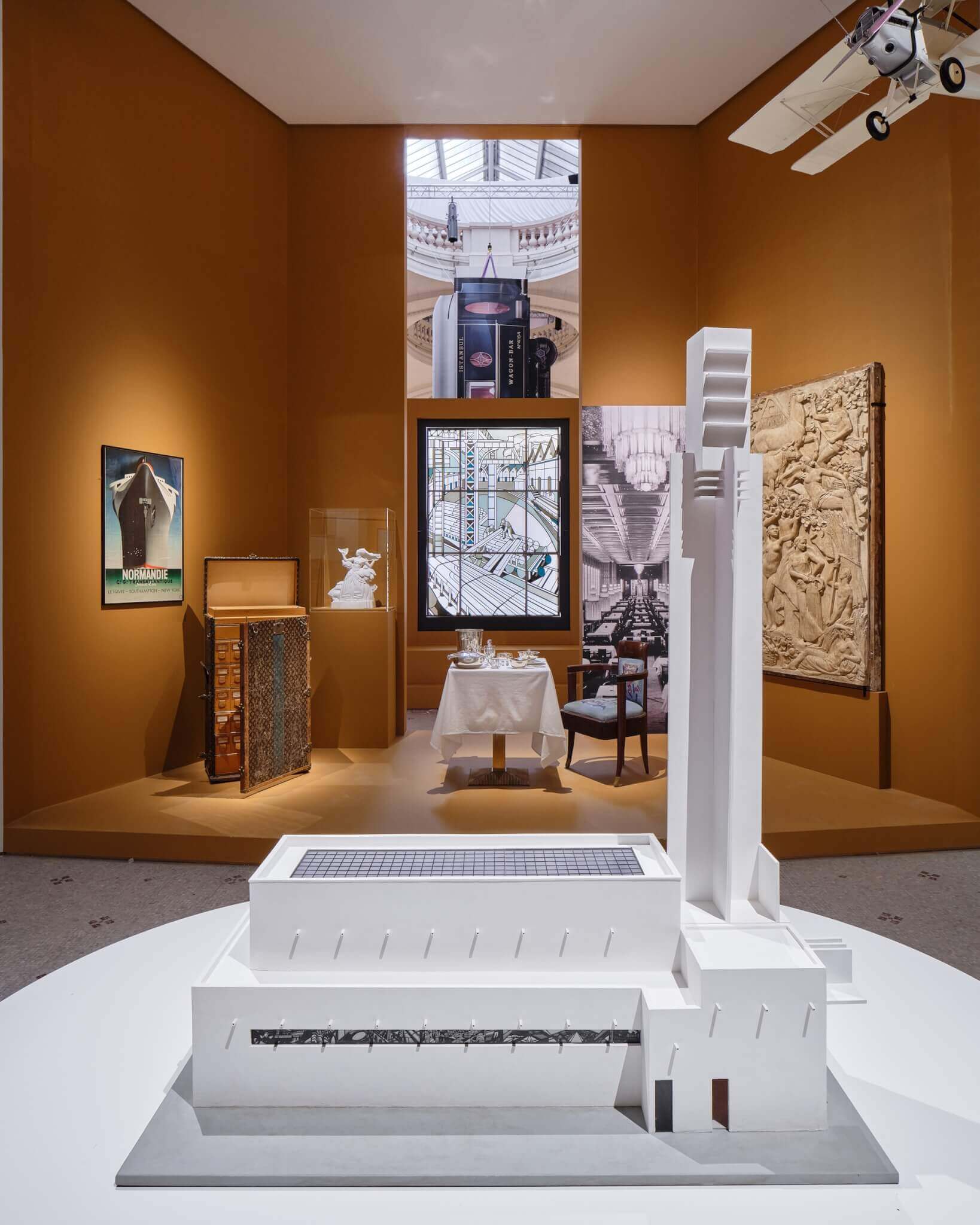
If MoMA’s Nakagin exhibition looked forward through decline, the Musée des Arts Décoratifs in Paris looked backward through a century of art deco. AN contributor Y-Jean Mun-Delsalle takes readers inside the expansive exhibition, which revisits the 1925 International Exhibition of Modern Decorative and Industrial Arts and traces art deco’s global afterlife across architecture, fashion, and the decorative arts. In her review, Mun-Delsalle reflects on the movement not as a closed historical chapter but as an evolving design philosophy. An ethos that continues to inform contemporary approaches to materials, luxury, and the relationship between handmade craft and industrial production.
On view through April 26, 2026
Salone del Mobile: The Furniture Fair as Cultural Barometer
Editor-in-chief Jack Murphy asked, “is Milan Design Week getting too hot for its own good?” He describes Milan Design Week as a success that may be pushing its own limits. Salone del Mobile continues to function effectively as a global trade fair for furniture and lighting, but the surrounding Fuorisalone has expanded into an overwhelming, brand-heavy spectacle. While the week delivered strong exhibitions, notable collaborations, and moments of historical and material awareness, it was also marked by excessive marketing, limited political engagement, and ongoing diversity issues. Murphy left impressed by the energy and creativity on display, but skeptical about the sustainability and direction of the event as it continues to grow.
Slow Down, the Copenhagen Architecture Biennial 2025, asked architecture to ease up
At the Copenhagen Architecture Biennial 2025, curator Josephine Michau and a roster of designers including THISS Studio, Tom Svilans, and Slaatto Morsbøl made a case for patience, reuse, and material stubbornness. Spread across pavilions, exhibitions, and talks in Copenhagen and Malmö, Slow Down let projects arrive unfinished, weathered, or delayed, turning construction time, salvage, and maintenance into the main event. Reviewed for AN by Ellen Peirson, the biennial treats architecture less as a polished object and more as an ongoing negotiation with materials, labor, and time.
CAB6 confronted crisis without consensus
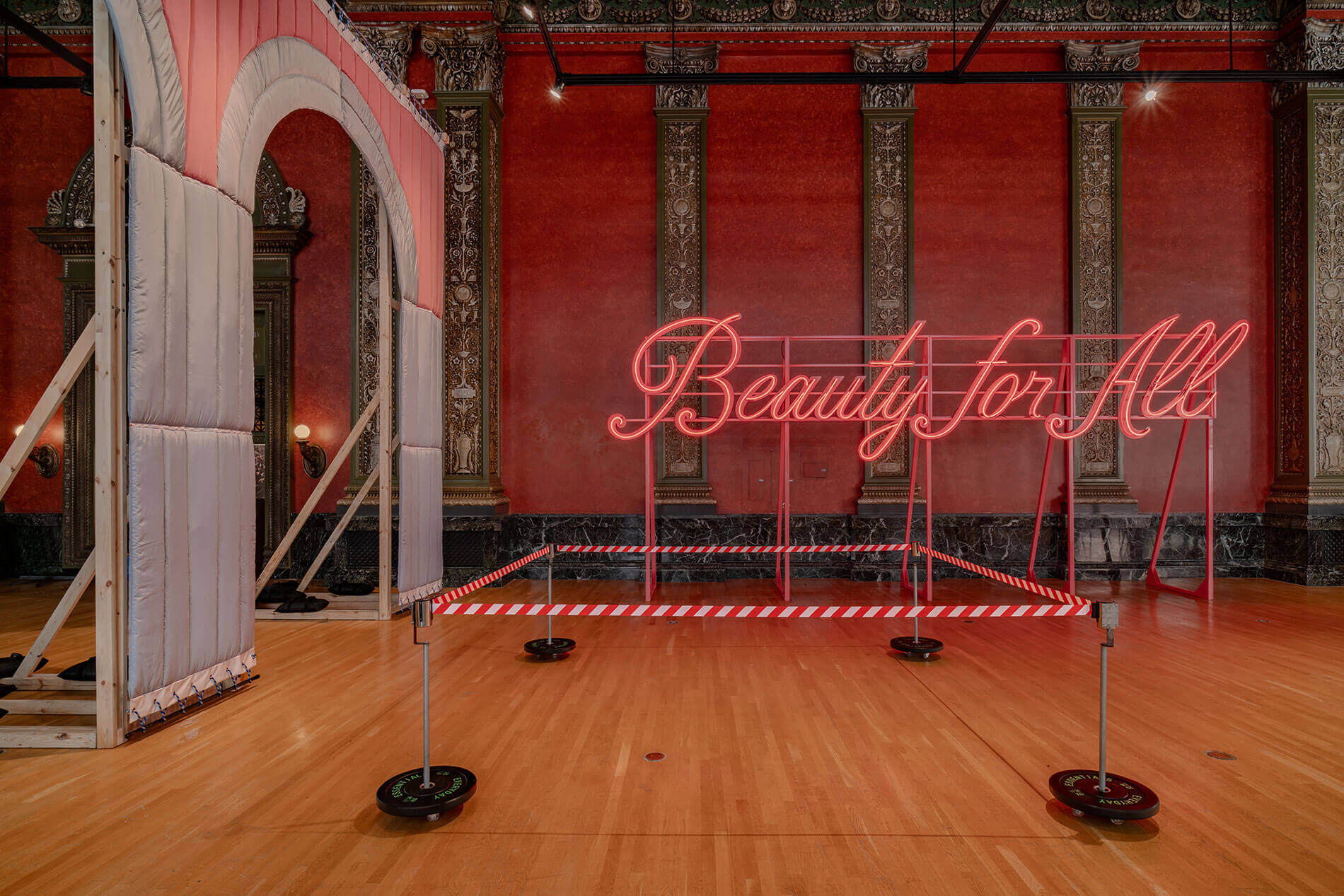
AN’s Daniel Jonas Roche reported from Chicago this fall as the sixth Chicago Architecture Biennial, Shift: Architecture in Times of Radical Change, unfolded across the Cultural Center, Graham Foundation, and satellite venues. Framed around uncertainty, political urgency, and ecological crisis, the biennial brought together material experiments, housing prototypes, archival reconstructions, and acts of refusal that asked what architecture can meaningfully do amid fascism, climate collapse, and institutional compromise. Rather than a unified curatorial statement, CAB6 presented a fragmented field of propositions ranging from earnest critiques of global supply chains and domestic life to lighter, sometimes tone-deaf spectacles.
In his coverage, Roche noted a persistent tension between the gravity of the moment and the biennial’s uneven responses. While some installations leaned into irony or branding, others foregrounded memory, maintenance, accessibility, and political refusal. Across the strongest works, survival, care, and ethical positioning emerged as more urgent than novelty, suggesting that in times of radical change, architecture’s most consequential gestures may lie in restraint, repair, and dissent rather than spectacle.
On view through February 28, 2026
Section as Cosmogram drew at a planetary scale
AN contributor Caroline O’Donnell reviewed Section as Cosmogram, an exhibition at Ithaca College that rethinks the architectural section as both an analytical tool and a cosmological diagram. Drawing on John McHale’s 1969 Super Scale Survey, the show assembles contemporary drawings that collapse scales from geology to atmosphere to planetary systems, refusing the section as a simple cut through a building. Across works by Pneumastudio, Lucito, Ibañez Kim, and others, the exhibition argues that architectural representation must expand to encompass climate, ecology, politics, and “hyperobjects” that exceed human perception, positioning drawing as a form of world-making rather than mere depiction.
Taken together, these exhibitions suggest that 2025 was less about architectural ambition than about architectural reckoning. Across scales and geographies, curators and designers treated architecture not as a solution machine but as a medium for grappling with limits. In a moment shaped by political disruption, climate anxiety, and institutional fragility, architecture exhibitions did not promise clarity or closure. Instead, they lingered in the unfinished, insisting that survival, care, and ethical positioning may now matter more than resolution or spectacle.